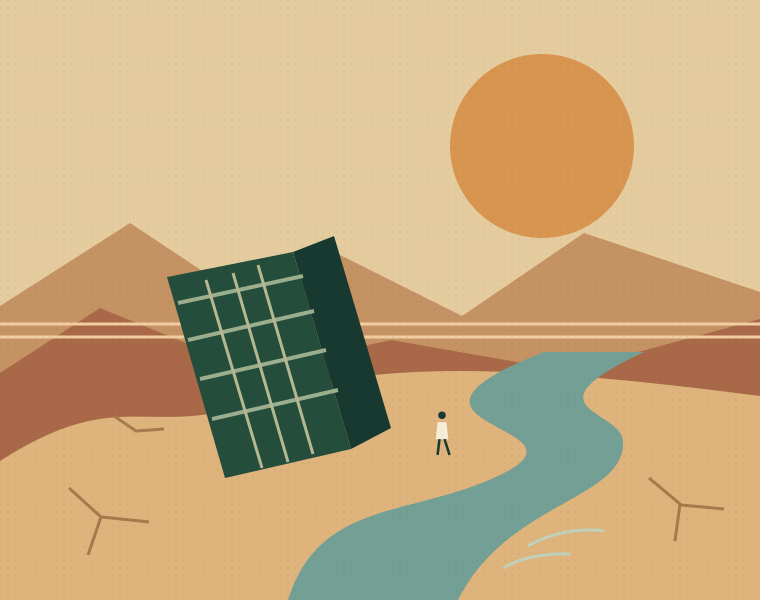
- EIA reports Southwest hydropower generation in April–August 2026 was 19% below the same period in 2025 and 28% below the ten-year average.
- The electricity supply region in this report covers Arizona, New Mexico and small parts of Nevada and California.
- EIA’s November outlook forecasts 6.13 billion kilowatt-hours of Southwest hydropower in 2026; the full-year figure is a forecast, not a completed-year total.
The measured decline
Hydropower generation in the Southwestern electricity supply region fell to record lows over the summer, the U.S. Energy Information Administration reported November 13. From April through August 2026, generation was 19% below the same period in 2025 and 28% below the ten-year average, according to its power-plant survey data.
The geography is specific. EIA’s electricity supply region includes Arizona, New Mexico and small parts of Nevada and California. These figures should not be presented as a 19% fall in all American hydropower, or in the entire West’s electricity supply.
Why reservoir elevation matters
EIA attributes the generation decline to prolonged drought conditions affecting the Colorado River Basin. It reports Lake Powell’s elevation at 3,518 feet at the end of September, compared with the 3,490-foot minimum power pool for generation at Glen Canyon Dam. Those figures are water-surface elevations, not measurements of reservoir depth or the percentage of water remaining.
The agency also reports Lake Mead at 1,038 feet at the end of September, above Hoover Dam’s 950-foot minimum power pool. Neither reservoir is described here as already below its generation threshold. Approaching a threshold and crossing it are different claims.
Management links upstream and downstream
EIA describes releases from Flaming Gorge and reduced releases from Lake Powell as measures intended to limit the risk of Powell falling below minimum power pool. Holding more water upstream can also affect water elevations downstream at Lake Mead and, in turn, generation at Hoover Dam.
That connection helps explain why this is not only a story about one generating station. Reservoir management links water supply and power production across the river system. The report provides that regional context; it does not quantify the effect on an individual household’s electricity bill.
Keep forecasts separate from observations
EIA’s November Short-Term Energy Outlook expects Southwest hydropower to total 6.13 billion kilowatt-hours in 2026, 9% below 2025 and 24% below the ten-year average. This is a full-year forecast, distinct from the observed April–August decline. The outlook also forecasts about 6.1 billion kilowatt-hours in 2027.
The agency notes that additional precipitation could improve the outlook, while one good water year would not necessarily erase multiple years of scarcity. Future rainfall and reservoir operations therefore matter to what happens next. The forecast is a planning input, not a promise that next year’s generation is already known.
Climate resilience is a public responsibility. Planning for scarce water and dependable clean electricity should protect essential needs and make trade-offs visible.
Where we standSources & the record.
Checked Nov 27, 2026Follow the evidence for yourself. Source dates and the periods covered matter; an official statement is attributed, not treated as independent proof.
- Hydropower generation in the Southwest fell to record lows this summer U.S. Energy Information Administration 2026-11-13
Primary article downloaded and checked. Cites Form EIA-923 for April–August observations and November 2026 Short-Term Energy Outlook for full-year forecasts. Region is Arizona, New Mexico and small parts of Nevada/California; reservoir levels are end-September water-surface elevations.

0 comments
In conversation order